
Import Licensing in India
A Complete Guide for Businesses, Importers & Exporters | Vidhi Veritas LLP
India is one of the world's fastest-growing import markets, and businesses regularly import machinery, electronics, chemicals, food products, medical devices, and industrial goods. While many products can be imported freely, certain goods require Import Licensing under India's Foreign Trade Policy and related regulations.
Understanding import licensing is essential for importers, manufacturers, traders, and businesses to avoid customs delays, regulatory penalties, and compliance issues.
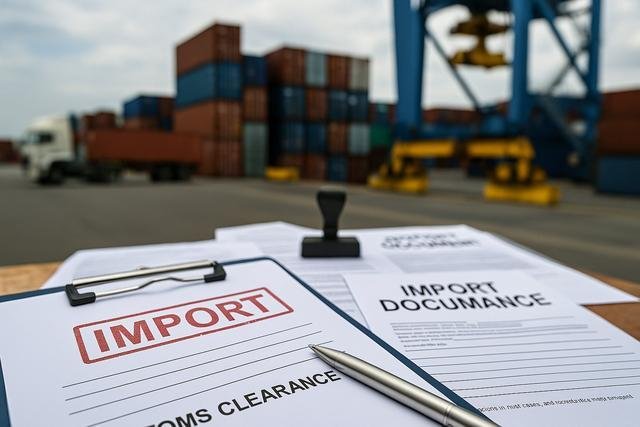
What is Import Licensing in India?
Import Licensing is a regulatory mechanism through which the Government of India controls or regulates the import of specified goods. Depending on the product category, businesses may require prior approval or a licence before importing goods into India.
Import licensing helps regulate sensitive products, protect public health and safety, ensure compliance with technical standards, and manage imports of restricted goods.
Import Licensing helps:
Regulate imports of restricted products.
Protect consumers and public safety.
Ensure compliance with Indian regulations.
Monitor imports of strategic and sensitive goods.
Why is Import Licensing Required in India?
Not every imported product requires a licence. India requires import licensing for specific categories of goods where regulatory oversight is necessary.
Import licences may be required for:
Restricted goods under the Foreign Trade Policy.
Certain chemicals and hazardous materials.
Medical devices and pharmaceuticals.
Agricultural and food products.
Wildlife-related products.
Defence and strategic goods.
The objective is to balance trade facilitation with national security, public health, environmental protection, and consumer safety.
Categories of Imports Under India's Foreign Trade Policy
Under India's Foreign Trade Policy, imported goods generally fall into different categories.
| Import Category | Meaning |
|---|---|
|
Free Imports |
Goods that can be imported without a licence, subject to applicable regulations. |
|
Restricted Imports |
Goods that require an import licence or prior permission before import. |
|
Prohibited Imports |
Goods that cannot be imported into India under applicable laws. |
|
State Trading Goods |
Goods whose import is permitted only through designated government agencies. |
Understanding the import category is the first step before placing an international order.
Products That Commonly Require Import Licensing
Several categories of goods require licences or regulatory approvals before import into India.
Examples include:
Medical devices and diagnostic equipment.
Certain chemicals and hazardous substances.
Agricultural seeds and plant materials.
Food products subject to regulatory approval.
Wireless and telecommunications equipment.
Precious metals and specific industrial products.
Importers should verify product-specific requirements before shipment.
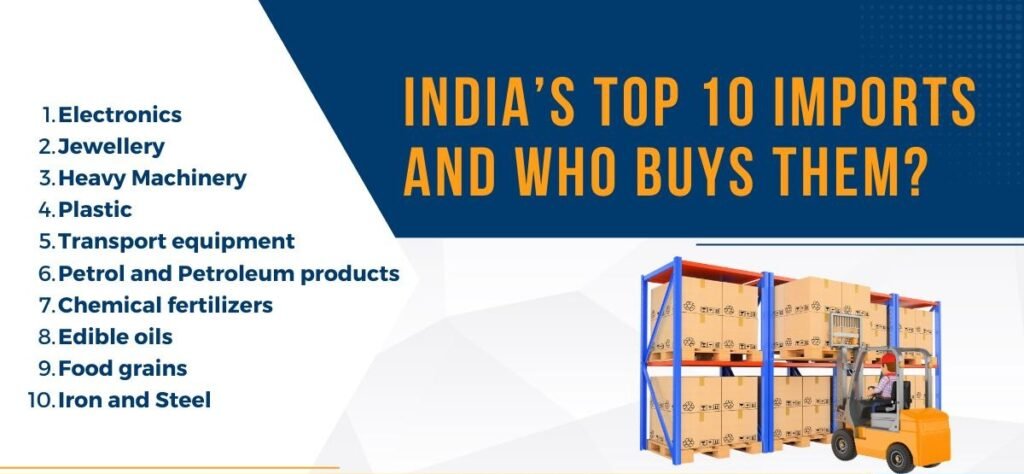
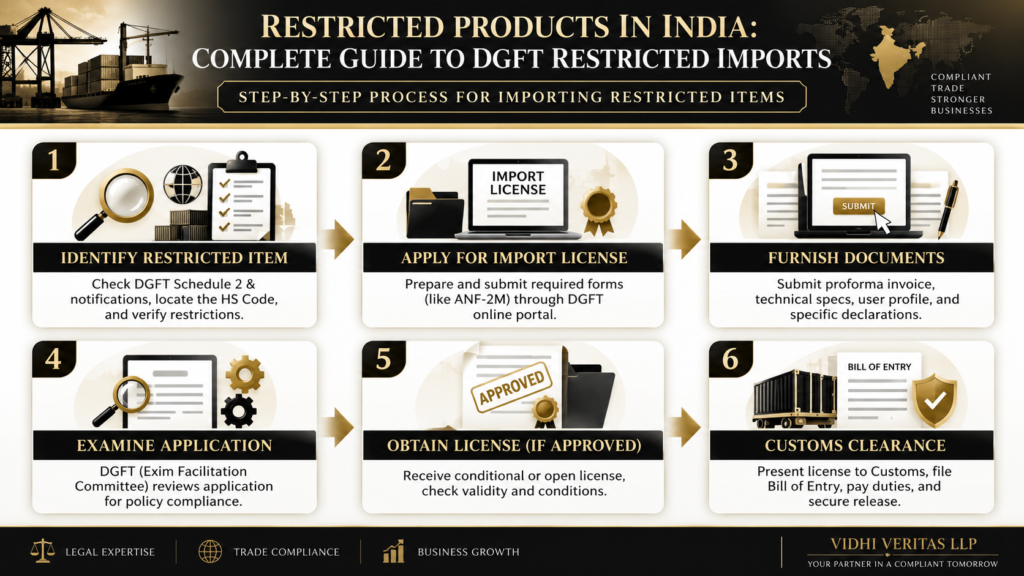
Import Licensing Process in India
Businesses should follow a structured compliance process before importing restricted goods into India.
| Step | Explanation |
|---|---|
|
Identify the Product |
Determine the HS Code and applicable import category. |
|
Check DGFT Requirements |
Verify whether the product is freely importable or restricted. |
|
Apply for Import Licence |
Submit the required application and supporting documents through the appropriate regulatory process. |
|
Obtain Regulatory Approvals |
Complete certification or approval requirements, if applicable. |
|
Customs Clearance |
Submit import documents and licence details during customs clearance. |
A proper licensing process helps businesses avoid shipment delays and compliance issues.
Legal Framework Governing Import Licensing in India
Import licensing in India is primarily governed by the Foreign Trade (Development and Regulation) Act, 1992, the Foreign Trade Policy (FTP), and notifications issued by the Directorate General of Foreign Trade (DGFT). Customs authorities implement licensing requirements during the import clearance process.
The legal framework ensures that imports of regulated goods comply with India's trade policy, safety standards, and regulatory requirements.
Common Documents Required for Import Licensing
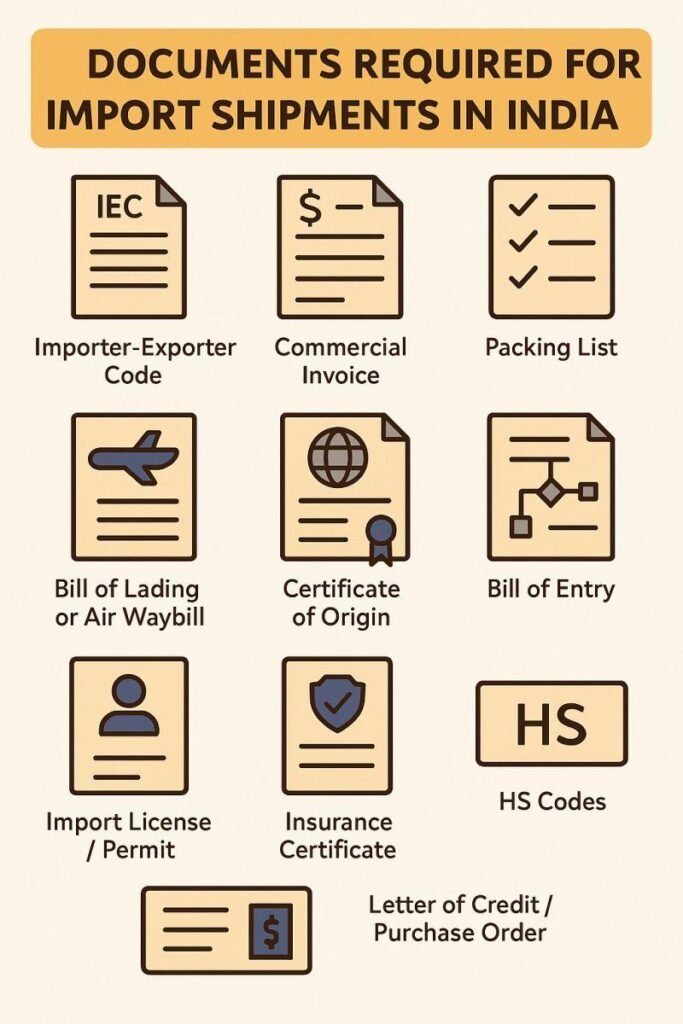
Depending on the product category, importers may need to submit supporting documents during the licensing process.
Common documents include:
Import Export Code (IEC).
Commercial Invoice.
Bill of Lading or Airway Bill.
Product specifications.
Technical certificates (if applicable).
Regulatory approvals from relevant authorities.
Import licence application and declarations.
Maintaining complete documentation helps ensure smoother customs clearance.
Impact of Import Licensing on Businesses
Import licensing directly affects businesses involved in international trade by introducing compliance requirements before goods enter the Indian market.
For Importers
Importers should verify licensing requirements before placing overseas orders to avoid shipment detention or rejection.
Manufacturers
Manufacturers importing raw materials, machinery, or components should ensure timely regulatory approvals to avoid production delays.
Traders and Distributors
Businesses dealing with regulated goods must monitor DGFT notifications and product-specific licensing requirements before import.
A proactive compliance approach reduces regulatory risks and improves supply chain efficiency.
Why Import Licensing Matters for Businesses
Import licensing is an important component of India's Non-Tariff Measures framework. It helps regulate sensitive imports while ensuring businesses comply with product-specific regulatory requirements.
Businesses that understand licensing obligations can:
Reduce customs delays.
Improve import planning.
Ensure regulatory compliance.
Minimize financial and operational risks.
Did You Know?
Under India's Foreign Trade Policy, most goods are freely importable. However, products classified as Restricted under the ITC (HS) Schedule require a valid import authorisation or licence from DGFT before they can be imported into India.
How Vidhi Veritas LLP Assists Businesses
Vidhi Veritas LLP provides legal and regulatory advisory services on import licensing, customs compliance, international trade regulations, and DGFT-related matters.
Our Expertise Includes
Advisory on import licensing requirements under the Foreign Trade Policy.
DGFT compliance and regulatory guidance.
Import Export Code (IEC) advisory.
Product classification and licensing assessment.
Customs compliance and trade facilitation.
Documentation review and regulatory support.
Advisory on restricted imports and product-specific regulations.
Strategic legal support for businesses engaged in international trade.
Our team assists importers, manufacturers, traders, and businesses in navigating India's import licensing framework while ensuring practical and legally compliant trade operations.
Conclusion
Import licensing plays a significant role in India's international trade framework by regulating imports of specified goods through a structured legal and regulatory process. Understanding whether a product is freely importable, restricted, prohibited, or subject to state trading is essential before initiating imports.
Businesses that comply with India's import licensing requirements are better positioned to ensure smooth customs clearance, reduce compliance risks, and maintain uninterrupted supply chains.
Vidhi Veritas LLP offers end-to-end legal support in Safeguard, Customs Advisory, Trade Remedies, Regulatory Compliance, and International Trade Law, helping businesses navigate complex trade regulations with confidence.
Business Compliance Tip
Before placing an international purchase order, businesses should verify the product's ITC (HS) Code and check whether it falls under the Free, Restricted, Prohibited, or State Trading category under India's import policy. This helps avoid shipment delays, customs detention, and unnecessary compliance costs.
Frequently Asked Questions (FAQs)
An import licence is an authorization required for importing specific categories of goods that are regulated under India’s Foreign Trade Policy.
No. Many products can be imported freely, while restricted goods require a licence or prior approval before import.
The Directorate General of Foreign Trade (DGFT) administers import licensing under India’s Foreign Trade Policy.
Imports that require a licence may face customs detention, penalties, confiscation, or other regulatory action under applicable laws.
IEC is a key business identification requirement for import and export activities in India and is generally required for carrying out international trade transactions.
Need Legal Guidance?
Trusted Counsel. Strategic Advice. Effective Representation.
Whether you need legal advice, dispute resolution, or representation, our team is ready to help you understand your options and take the right legal steps.